
How Interior Designers Rethink a Room Layout
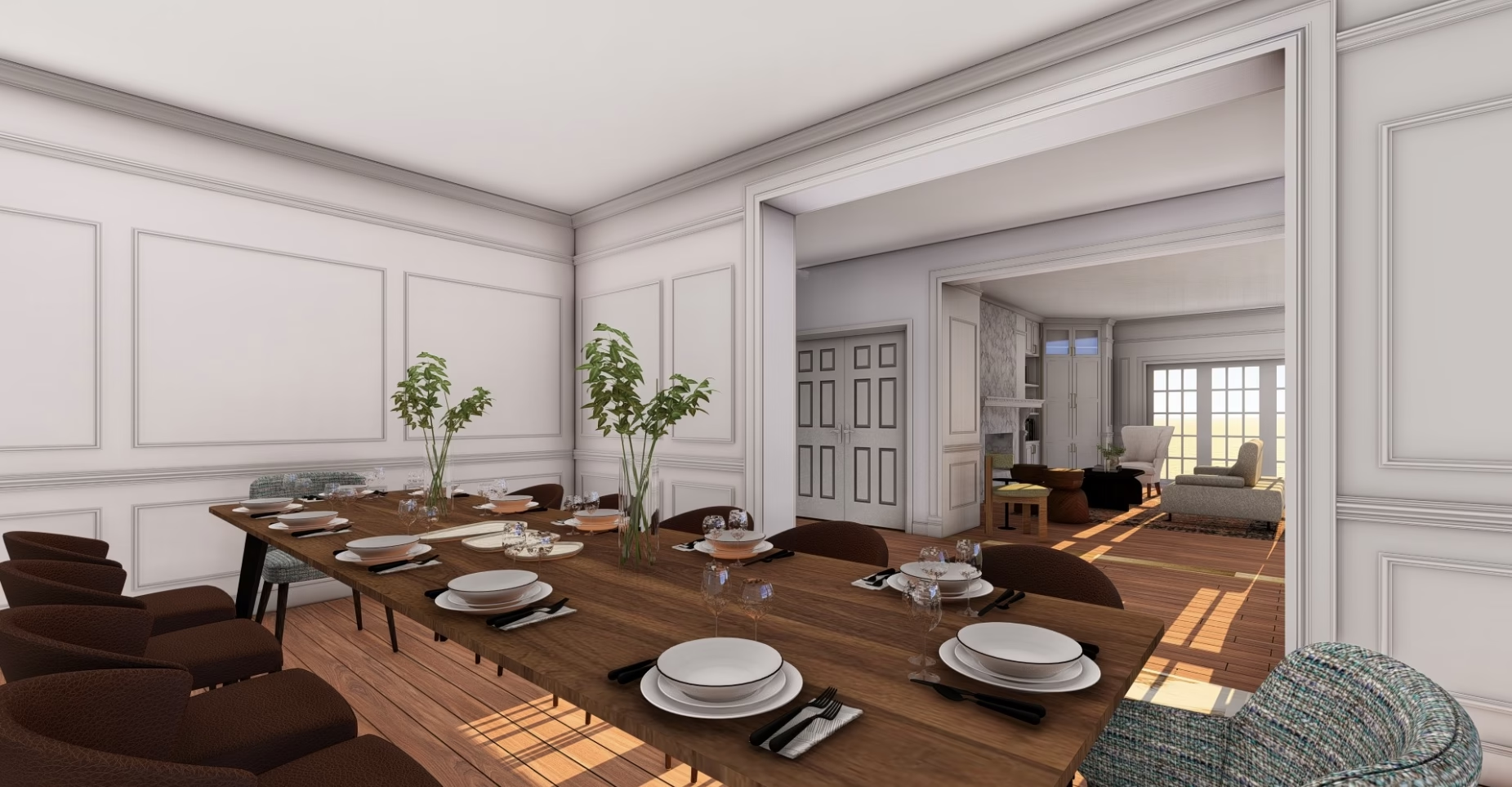
A room can have beautiful furniture, good art, generous square footage, and still feel wrong. Often the problem is not the room itself. It is the layout.
Layout is not just where the sofa goes. It is the logic of how a room works: where people sit, what they face, how they move, where the light falls, how one space connects to another, and whether the room supports the way people actually live.
This is where many homes go wrong. People assume layout is intuitive. They buy a sofa, place it opposite the fireplace or television, add two chairs, and hope the room will somehow come together. Sometimes it does. More often, the room looks “correct” in a basic furniture-plan sense but feels stiff, unused, or strangely uncomfortable.
Good layout is not about forcing a perfect diagram onto a room. It is about creating balance, movement, and purpose.
Balance is Not the Same as Symmetry
One of the most common mistakes in interior design is confusing balance with symmetry.
Symmetry can be beautiful in architecture. A doorway aligned with another doorway, a well-proportioned opening between rooms, or a carefully restored prewar plan can bring calm and order to a home. But when symmetry becomes the default approach to furniture, it often starts to feel sterile.
The classic problem is the sofa-sofa-coffee-table arrangement. It looks easy. It looks balanced. It also often feels like a doctor’s office, a lawyer’s reception area, or a hotel lobby. It is too perfect. It does not invite real living.
Nature is not perfectly symmetrical. Trees are asymmetric. Mountain ranges are asymmetric. Beaches are asymmetric. Even classical architecture, which many people think of as the height of symmetry, is often more subtle and irregular than it first appears. A home should have that same sense of natural balance. It should feel composed, not mechanically mirrored.
In a living room, that might mean a substantial sofa balanced by two lighter armchairs. It might mean a daybed near a window, a reading corner off to one side, or a chair that swivels between the television and the view. The goal is not to make the left side and right side match. The goal is to make the room feel alive.
Should furniture be the first thing changed in a room layout?
Before moving walls or starting construction, the first question should be simple: is the furniture plan working?
The easiest way to change a layout is often through furniture. A room may not need a renovation. It may need a better seating arrangement.
Many people push furniture against the perimeter of a room because they think it will make the space feel larger. Instead, it often creates a big empty center and forces people to talk across the room. The room becomes less intimate, not more spacious.
A better furniture plan creates relationships. A sofa can speak to a pair of chairs. A daybed can relate to a window. A small game table can create another reason to use the room. A reading chair can become part of the larger conversation instead of being stranded in a corner.
The furniture should feel as if it is having a conversation with itself, with the architecture, and with the world outside. Not every seat has to face the same wall. Not every chair has to serve the television. Not every room needs one dominant center.
How do you design a living room not centered around the television?
The television is one of the biggest layout traps.
Of course, most people want a comfortable place to watch TV. That is reasonable. But the television should not automatically become the altar of the room.
In many New York apartments, the best feature is not the television wall. It may be a city view, a wall of windows, a fireplace, a piece of art, or the architecture itself. Yet people often arrange the entire room around the screen and ignore everything else the room has to offer.
A good layout can do more than one thing. Some seating can face the television. Some can enjoy the view. Some can support conversation. A chair on a swivel base can shift between focal points. A room does not have to choose one purpose and abandon all others.
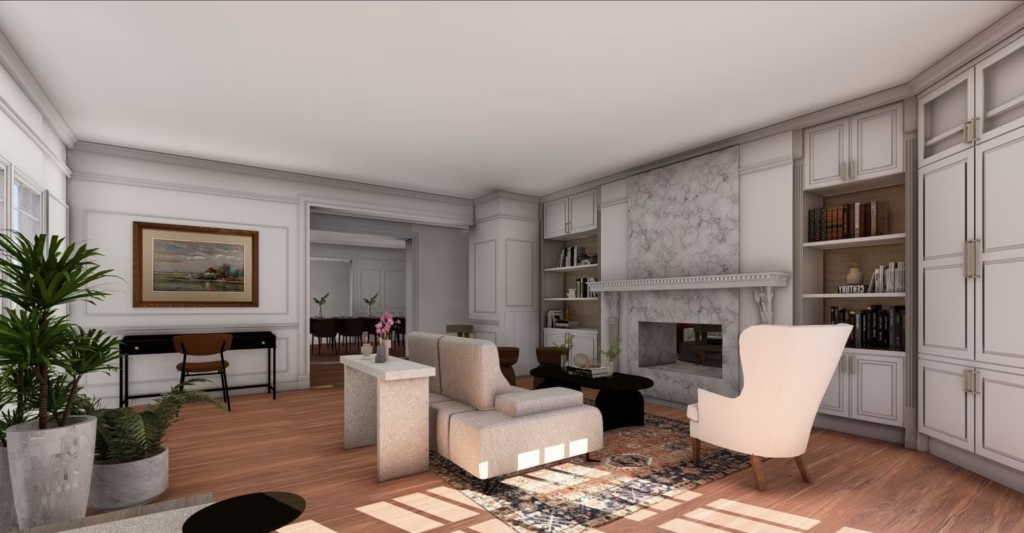
The same issue happens with fireplaces. A fireplace is a gift, but it can become a trap. People assume the sofa must face it directly and that the TV must go above it. Often, that creates a rigid room where the fireplace controls everything and the rest of the space is unresolved.
The better question is not, “Where is the obvious focal point?” The better question is, “How should this room actually be used?”
Why are large rooms often harder than small ones to design?
Large living rooms can be surprisingly difficult to design.
In a small room, the limits are obvious. There may only be one or two workable furniture arrangements. In a large room, the possibilities multiply, and that is where people get lost.
The most common large-room mistakes are predictable. One sofa floats awkwardly in the middle. Every piece of furniture gets pushed against the walls. The television dominates the room. A sectional becomes so large that it swallows the space. Corners go unused. The room has square footage, but no intimacy.
How do you create zones in a large living room?
That does not mean chopping it into disconnected pieces. It means creating areas that overlap and relate to one another: a main seating group, a reading area, a game table, a desk, a daybed near the window, or a smaller conversation area by the fireplace. The room should feel generous, but not empty. Layered, but not cluttered.
This is where proportion matters. A heavy sofa next to another heavy sofa can make a room feel blocked and static. A substantial sofa balanced by lighter chairs, open legs, or a daybed creates more air. Chairs without arms, swivel chairs, and more portable pieces can make a space feel flexible instead of fixed.
A sectional can be useful in the right room, but it is often overused. In many spaces, a sofa and two chairs will do more. They preserve circulation, allow conversation, and prevent the room from feeling like one giant piece of upholstery.
Layout is also about Movement
A room is not successful if it only looks good from one angle.
You have to be able to move through it. You have to be able to enter the room without facing the back of a giant sofa. You have to be able to reach a chair without walking around a furniture fortress. You have to be able to serve drinks, talk to guests, watch TV, read, or sit quietly without the room fighting you.
Bad layout often wastes space on awkward traffic paths. People think they are creating order, but they end up creating dead zones: empty strips of floor that exist only because the furniture is too rigidly arranged.
And with that in mind, good layout turns square footage into usable space. A room that was once ignored can suddenly become a place for parties, dinners, reading, working, or relaxing.
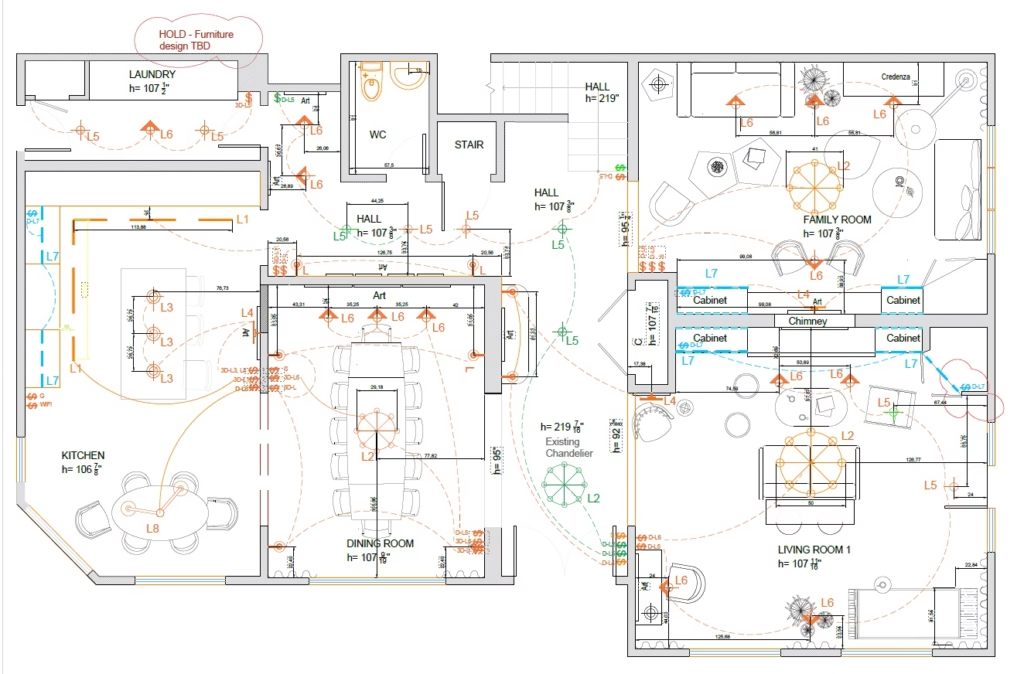
When is the problem the architecture and not the furniture?
Furniture is the first tool, but it is not the only one.
Sometimes a room does not work because the openings are wrong, the doors are badly placed, or a later renovation interrupted the original flow. A doorway may be too narrow. Two rooms may sit next to each other but feel disconnected. A wall may divide spaces that should borrow light and volume from one another.
In those cases, the layout solution may be architectural.
That might mean widening an opening, adding pocket doors, removing an unnecessary door, or framing a passage with wood trim so the eye is drawn into the next room. In some homes, rooms can be arranged in an enfilade, where one room opens visually into the next. That sense of connection can make an apartment feel calmer, larger, and more gracious.
Pocket doors are especially useful because they allow a room to change character. A den can be private during the day, open to the living room during a party, and closed again when used as a guest room. You gain flexibility without losing definition.
Not every wall can come down, especially in New York. Some walls are structural. Some changes involve co-op boards, building management, filings, electrical work, or plumbing. But even when construction is limited, there are still ways to change the experience of a room. A mirror can create the feeling of an opening by reflecting light or a view. A framed passage can make a simple doorway feel intentional. A better furniture plan can make two disconnected areas feel related.
Can lighting change the way a room feels?
Lighting is often treated as decoration, but it is also spatial.
A room can physically stay the same while lighting changes how the layout feels. A pool of light over a coffee table can define a seating area. Accent lighting on art can activate a wall and pull it into the room. A soft wash of light across several walls can make a dark room feel larger and more open.
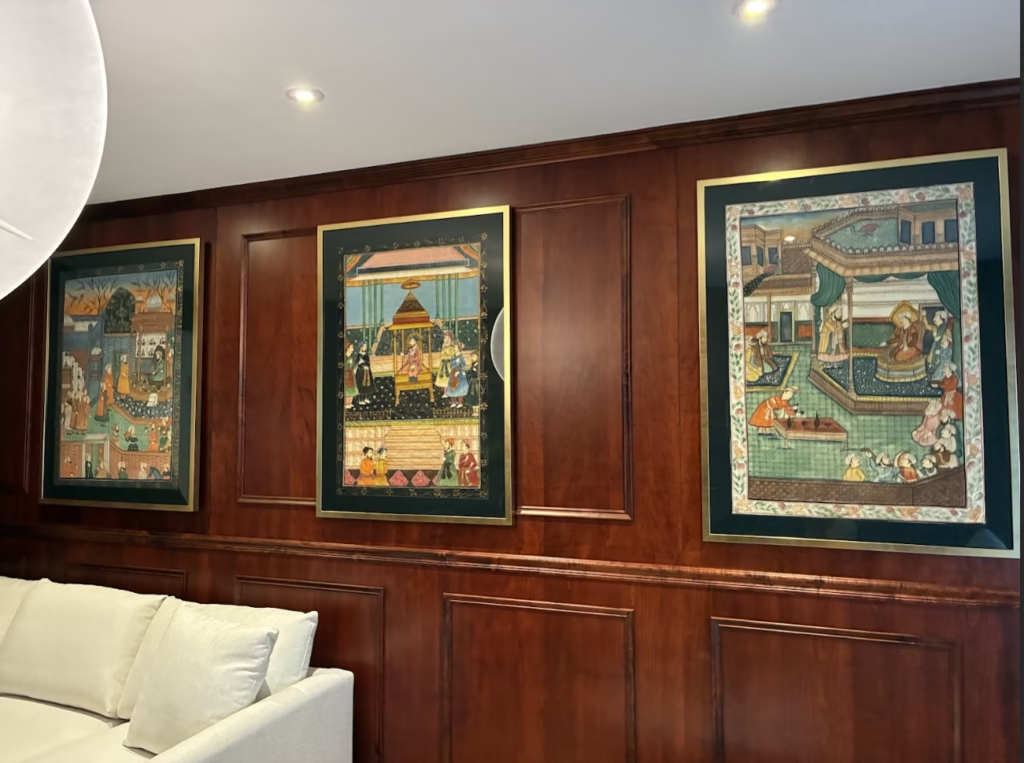
This is especially important in New York apartments, where rooms may face courtyards, neighboring buildings, narrow streets, or the back of a brownstone. You cannot always solve darkness with a chandelier or a pair of sconces. Decorative lighting is meant to be seen. Architectural lighting is meant to shape the room.
Good architectural lighting can almost act like controlled natural light. It can define zones, reinforce geometry, highlight art, and make a room feel less flat. In a large living room, lighting can help each area feel purposeful. In a dark apartment, it can make the entire layout feel more generous.
What are common layout problems in New York?
New York homes come with very specific layout challenges.
Brownstones are often narrow, with fireplaces that dominate the room and parlor floors that can be hard to furnish. Glass high-rise apartments may have spectacular views but very few solid walls for art, furniture, or television placement. Open-plan apartments can feel like one large undefined space. Prewar apartments may have been chopped up by decades of so-called improvements. New construction may have acceptable square footage but bland finishes, hollow doors, poor lighting, or kitchens and bathrooms that were never designed with much care.
Then there are the structural constraints: columns placed several feet inside a glass wall, concrete ceilings that cannot be pierced for lighting, plumbing stacks that limit bathroom changes, curved walls, angled kitchens, redundant kitchens in combined apartments, and building rules that shape what is possible.
A good layout does not pretend those constraints do not exist. It works with them.
Sometimes that means turning a bed sideways so a small room can become a daybed or study. Sometimes it means using custom cabinetry to resolve an odd angle. Sometimes it means using a curved curtain track because the glass wall is not straight. Sometimes it means opening a tiny room into the living room so it becomes a useful desk area instead of a claustrophobic leftover space.
In New York, layout is often a negotiation with the building itself.
What questions should you ask before redesigning a room layout?
The best layout question is not “What looks impressive?” It is “What does this room need to do?”
Do you entertain? Watch movies? Read? Work from home? Host overnight guests? Want the room to feel formal, relaxed, flexible, intimate, or expansive? Do you care more about the view, the fireplace, the art, the television, or conversation?
Once those questions are clear, the design can follow.
Sometimes the answer is a new furniture plan. Sometimes it is lighting. Sometimes it is a widened opening, a pocket door, a restored architectural detail, or a more ambitious renovation. The process should be scalable. Not everyone needs the most expensive construction solution. Not every layout issue requires a gut renovation.
The point is to understand what will make the biggest difference.
A good designer helps the client ask the right questions, study what is possible, price the options realistically, and adjust as needed. You discover, then pivot. You do not force the same formula onto every room.
What makes a room layout feel natural?
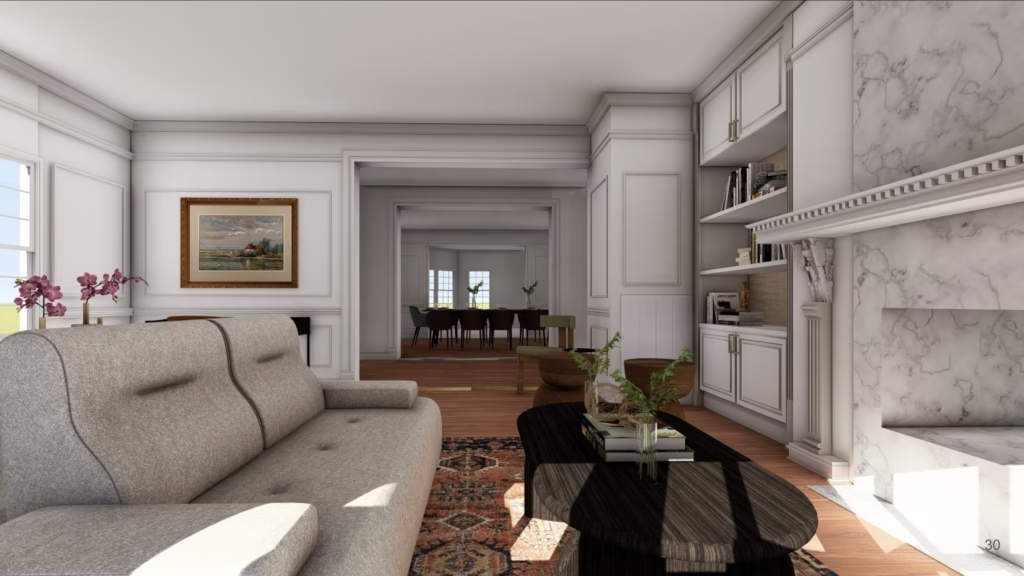
When a layout works, people may not immediately know why. They simply use the room more. They sit more comfortably. They talk more naturally. They notice the view. They move through the space without obstruction. A room that once felt awkward begins to feel inevitable.
That is the real value of layout. It is not just arranging furniture. It is turning space into a place where life can actually happen.
-----------
Extra Tip: How much does an interior designer cost?
Interior design cost can often be top-of-mind with clients. That said, we'd like to offer some helpful context on how interior design costs fit into an overall project budget. Please visit our Guide to interior design costs in New York and learn more.