
Asymmetry Design: How an Interior Design Challenge Can Become an Advantage
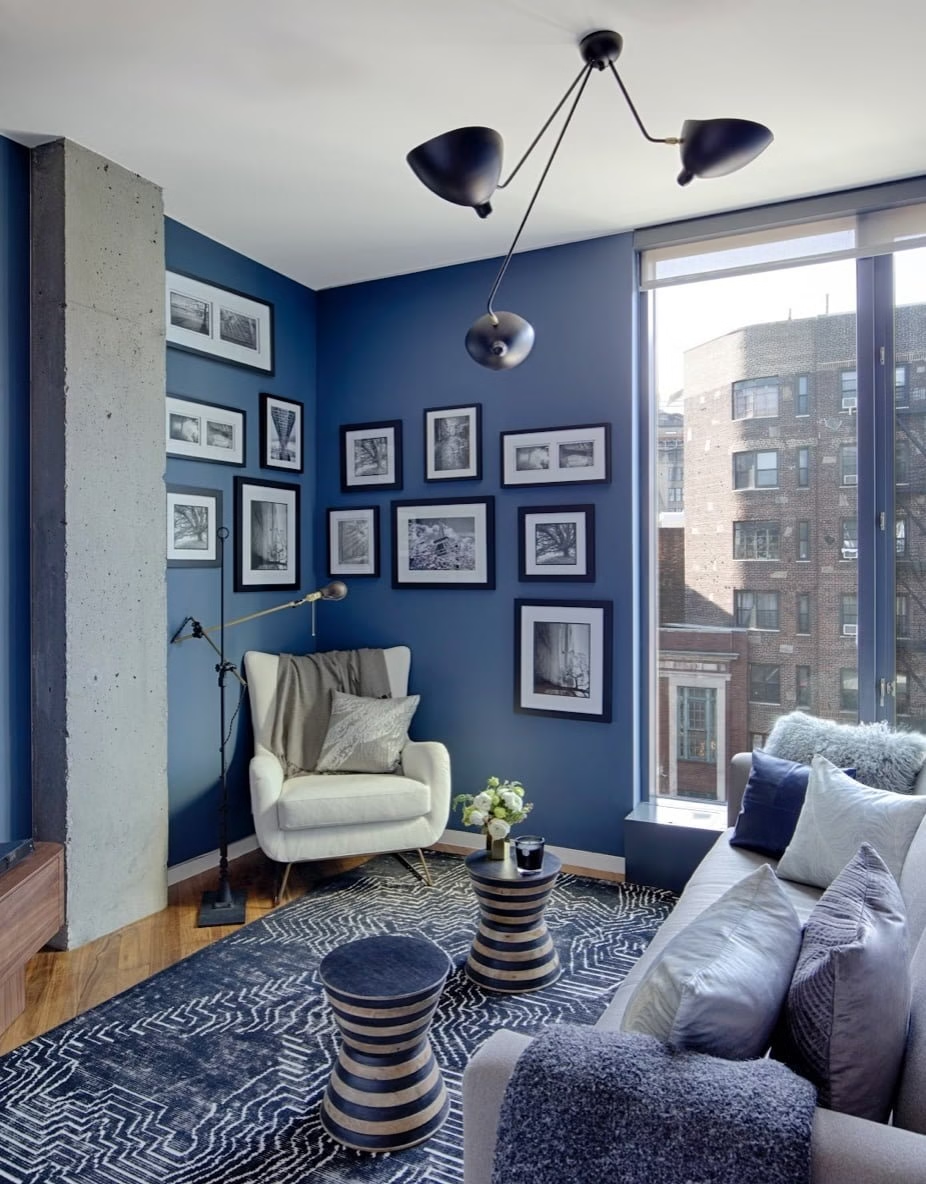
In an ideal world, every room would come with perfectly symmetrical walls, balanced ceiling heights, and architectural features that make furniture placement a breeze. But that’s not the reality we live—or design—in. Especially here in the city. And as a New York interior designer, I look to achieve a balanced composition that feels stable and aesthetically pleasing to the eye.
The truth is, asymmetry doesn’t have to be a flaw. In fact, when handled with thought and care, it can be one of the most interesting parts of a room’s design.
Embracing the Quirks of NYC Living
Living in New York means accepting—and even loving—the quirks that come with it. I once worked on a West Village apartment where the living room had a dramatically slanted ceiling on one side and a protruding structural column in the middle of the room. Instead of fighting the asymmetry, we leaned into it by using a sculptural floor lamp to echo the verticality of the column and anchored the room with asymmetrical art groupings to create visual balance. The result? A space that felt collected, personal, and utterly New York.
Each neighborhood presents its own challenges and opportunities. A classic Brooklyn brownstone might have an original fireplace slightly off-center, while a modern high-rise in Long Island City could come with exposed ductwork that creates visual imbalance. As designers, our job is to take these “imperfections” and make them work.
Asymmetry Design: Power of Visual Balance
Achieving balance doesn’t mean everything has to be mirrored or duplicated. While symmetry can be calming, asymmetry often feels more natural, more like how we actually live. The key is knowing how to balance the weight of objects and empty space so the overall room still feels cohesive.
For example, we might pair a substantial sectional sofa with an oversized piece of abstract art on the opposite wall, letting the scale and visual weight of each element create equilibrium. Or we might offset a tall built-in bookshelf with a horizontal bench and a textural throw to lead the eye around the space without letting one side dominate.
Color and contrast play a big role here, too. A dark accent wall can ground a room, while lighter furniture and metallic finishes help balance things out. We recently worked on a Tribeca apartment where an uneven ceiling line was disguised (and then highlighted) with a custom mural that subtly followed the contour of the space. It’s a perfect example of how design can both camouflage and celebrate architectural oddities.
Working With, Not Against, Architectural Constraints
Unlike showrooms or renderings, real homes have limitations: fixed plumbing locations, load-bearing walls, oddly spaced windows. What sets us apart is that we don’t see these as obstacles, but as creative prompts.
From selecting the right scale of furniture to strategically placing mirrors or lighting, we approach each asymmetry design layout with fresh eyes. Sometimes that means layering unexpected elements, like combining vintage and contemporary pieces to shift the visual focus. Other times, it’s about using window treatments or drapery to elongate lines and soften irregularities.
And yes, all of this matters when budgeting for interior design projects too. So, if you're wondering whether complex layouts add to the cost, we break that down in this article about what interior designers cost.
Collaboration is Key
Great design doesn’t happen in a vacuum. We collaborate closely with our clients, architects, contractors, and vendors to make sure each element serves a purpose, especially when we’re dealing with asymmetrical floor plans. It’s this hands-on, holistic approach that lets us transform spatial oddities into thoughtful, lived-in beauty.
We also listen closely to how our clients live. Do they entertain often? Need room for kids or pets? Prefer open or tucked-away storage? All of these answers influence how we create flow and balance, even in the most challenging layouts.
Ultimately, asymmetry design gives us an opportunity to build something that couldn’t exist anywhere else. And in a city where uniqueness is part of the charm, that’s a good thing.
***
For a few other thoughts on this topic, read about my Brooklyn Brownstone project and how we worked with some interesting design challenges.
Also, I love this short article that references asymmetry in this beautiful Hamptons home (Bridgehampton, to be specific) that was designed from a barnhouse.