
NYC Interior Designer Project Breakdown: Inside a Brooklyn Brownstone Renovation
This Brooklyn brownstone apartment is one of those projects that still feels close to my heart. It has the things I love most about New York interiors: history, quirks, architectural detail, vintage finds, flea market pieces, custom work, and a few practical modern updates that make the home easier to live in.
As an NYC interior designer, I’m always trying to find the balance between preserving character and making a space feel fresh, personal, and functional. A brownstone should not feel like a museum. It also should not be stripped of everything that made it special in the first place.
This project shows how old and new can work together: antique pieces, modern furniture, custom cabinetry, art, lighting, and personal objects layered into rooms that feel collected over time.
How does an NYC interior designer approach a Brooklyn brownstone renovation?
A Brooklyn brownstone comes with history built in. The proportions, moldings, doors, fireplaces, woodwork, and room shapes already give the home a strong point of view.
That is the starting point. The goal is not to erase that history. The goal is to understand it, edit it, and then bring the home into the present.
In this project, the design was not about choosing one perfect style and repeating it in every room. It was about letting each space have its own character while still feeling connected to the rest of the apartment.
That is a big part of working as a New York interior designer. Every apartment has limits, but those limits can become part of the design. Older buildings are rarely perfect boxes. They have odd corners, narrow rooms, inherited details, and renovation surprises. The work is in making those things feel intentional.
How do you update a historic brownstone without losing its character?
The best brownstone interiors usually respect what is already there.
That can mean preserving architectural details, reusing old doors, working with existing fireplaces, or choosing furniture that does not fight the period of the home. The goal is not to erase that history, but to shape a clear design vision from the home’s existing character. It can also mean adding modern pieces so the space does not feel frozen in time.
For this project, I wanted the rooms to feel warm, layered, and personal in a way that could reflect the people living there. That meant mixing vintage, antique, custom, retail, and flea market pieces instead of sourcing everything from one place.
A brownstone renovation works best when it feels like it has evolved around a real lifestyle. The room should look designed, but not staged. The work is in helping odd corners, narrow rooms, and inherited details feel like intentional design decisions rather than problems to hide.
What makes Brooklyn brownstone residential interior design different from other NYC apartments?
Brooklyn brownstones have their own rhythm. They are often narrower than people expect. Fireplaces may dominate a room. Doorways, windows, moldings, and stairs can strongly affect furniture placement, and the original form of each room often needs to lead the layout.
That is different from designing a glass high-rise apartment, a downtown loft, or a newer condo. In a brownstone, the architecture usually speaks first, and the location matters because Brooklyn brings a different context and pace than other NYC homes.
This project leaned into that. The rooms use color, art, furniture, and vintage details to reflect the client’s personality while working with the architecture instead of ignoring it.
The result is a home that feels rooted in Brooklyn but still modern enough for the way the client lives day to day, so it looks designed without feeling staged.
What makes the living room feel collected rather than decorated?
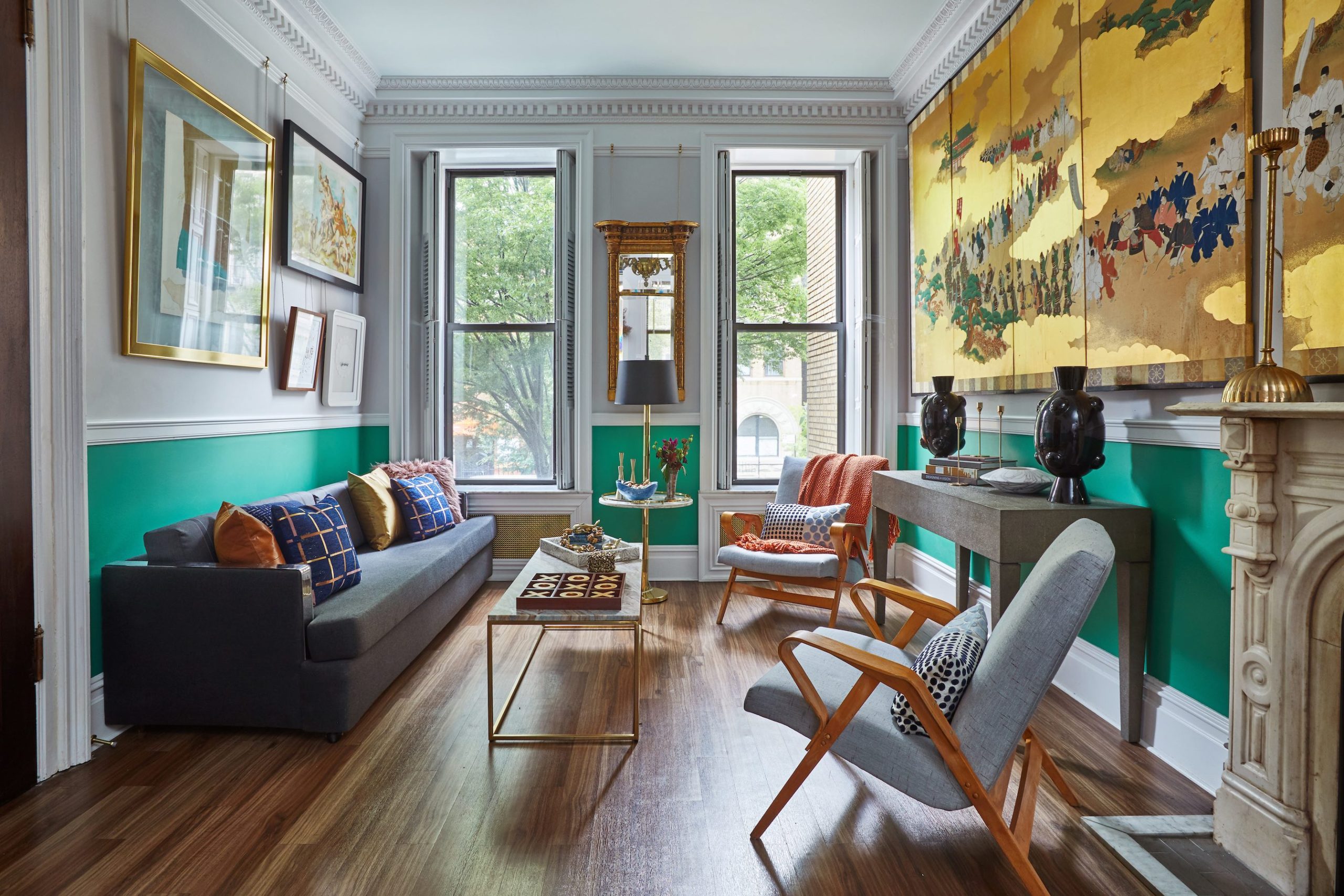
The living room is where eclectic meets timeless. It has modern comfort, antique detail, strong color, contemporary art, and furnishings that each bring a different story into the room. Its varied room shapes also affect furniture placement and flow, so the layout feels collected but still easy to move through.
Instead of creating a showroom look, the space mixes sources and periods:
- Coffee table: West Elm
- Tic-tac-toe set: Amazon
- Pictures: Housing Works
- Frames: Boerum Frames
- Couch: flea market find with Paul Smith fabric
- Console: Made Goods
- Chairs: warehouse find from the Fort Lauderdale exurbs
- Mirror: mid-18th-century acorn-detailed gold leaf mirror from Brimfield Antique Flea Market
- Vases: Rose Bowl Flea Market
- Lamp: vintage Fort Lauderdale table lamp attributed to Tommi Parzinger
- Paneling: Meiji-era Japanese oversized screen found on eBay. I'm also including a link here from 1stdibs to show some other samples of Japanese screens)
The Meiji-era screen is one of the strongest elements in the room. The panels depict a nobleman’s procession to Imperial Edo, now known as Tokyo. It adds scale, history, color, and a sense of movement. The mirror brings in a traditional note that sharpens the contrast with the room’s newer elements.
This is why I like mixing high, low, vintage, retail, and antique pieces. A room becomes more interesting when it does not look as if everything arrived from the same catalog, and it feels especially right for this Brooklyn apartment and the way life unfolds here.
Why do NYC interior designers mix vintage, antique, retail, and custom pieces?
Mixing sources gives a room depth.
A West Elm coffee table can sit comfortably near an antique mirror. A flea market sofa can become more special with Paul Smith fabric. An eBay screen can become the visual anchor of a brownstone living room. A Made Goods console can work alongside vintage lighting, framed finds from Housing Works, and custom furnishings.
That mix is what keeps a room from feeling generic, and the creativity comes from balancing modern comfort with traditional detail.
In New York, this kind of sourcing also makes sense because homes often already have layered histories. A brownstone may have 19th-century architecture, 20th-century renovations, and 21st-century needs. The furniture should be allowed to have that same layered quality, with new pieces and contemporary art sitting naturally beside historic elements.
The best rooms usually do not feel like they were bought in one weekend. They feel built over time.
How does an interior designer choose furniture for a brownstone living room?
Furniture in a brownstone has to work with the architecture, not just fill the room.
The living room needs seating, circulation, focal points, and balance. But it also has to respect the room’s proportions, so a floor plan and thoughtful space planning matter more in brownstones where standard layouts can feel stiff.
In this space, the design works because the furniture does not try to be too perfect. The pieces relate to each other, but they do not match too much. The sofa, chairs, console, antique mirror, custom furnishings, art, and screen each bring something different.
That kind of mix creates a room that feels comfortable and personal rather than overly arranged. The best rooms usually combine older finds with new pieces added over time, and the depth comes from creativity in sourcing as much as from the mix itself.
What design details make a brownstone kitchen feel custom?
The kitchen shows how custom work and found objects can make a practical room feel personal.
Key elements include:
- Hardware: Rejuvenation
- Table: street find from the Upper East Side
- Napkin rings and placemats: Made Goods
- Cabinets: custom
- Backsplash: original project photography
The custom cabinetry gives the kitchen structure and improves organization. The found table keeps it from feeling too predictable. The hardware and accessories add polish without making the room feel overly formal.
That is often the sweet spot in a brownstone kitchen renovation, focusing on function without losing personality. It needs to function well, but it should still feel connected to the rest of the home.
A kitchen should not feel like it was dropped in from another apartment. It should belong to the architecture and to the people who live there.
How do you make a brownstone kitchen feel modern without making it cold?
A modern kitchen does not have to feel cold. The key is texture, proportion, and personal detail.
Custom cabinets can make the room feel clean, organized, and better structured for everyday use. Warm materials, vintage finds, interesting hardware, and personal objects keep it from feeling sterile, while innovative updates help the space feel current without losing warmth.
In a historic New York home, I usually do not want the kitchen to feel disconnected from the rest of the apartment. Even when the appliances, storage, and work surfaces are updated, the room should still feel like part of the brownstone.
That is where details matter. Hardware, table shape, cabinet color, lighting, backsplash, and even placemats can affect whether the renovation works by improving function without losing the home’s personality.
How do you design a brownstone bedroom with warmth and character?
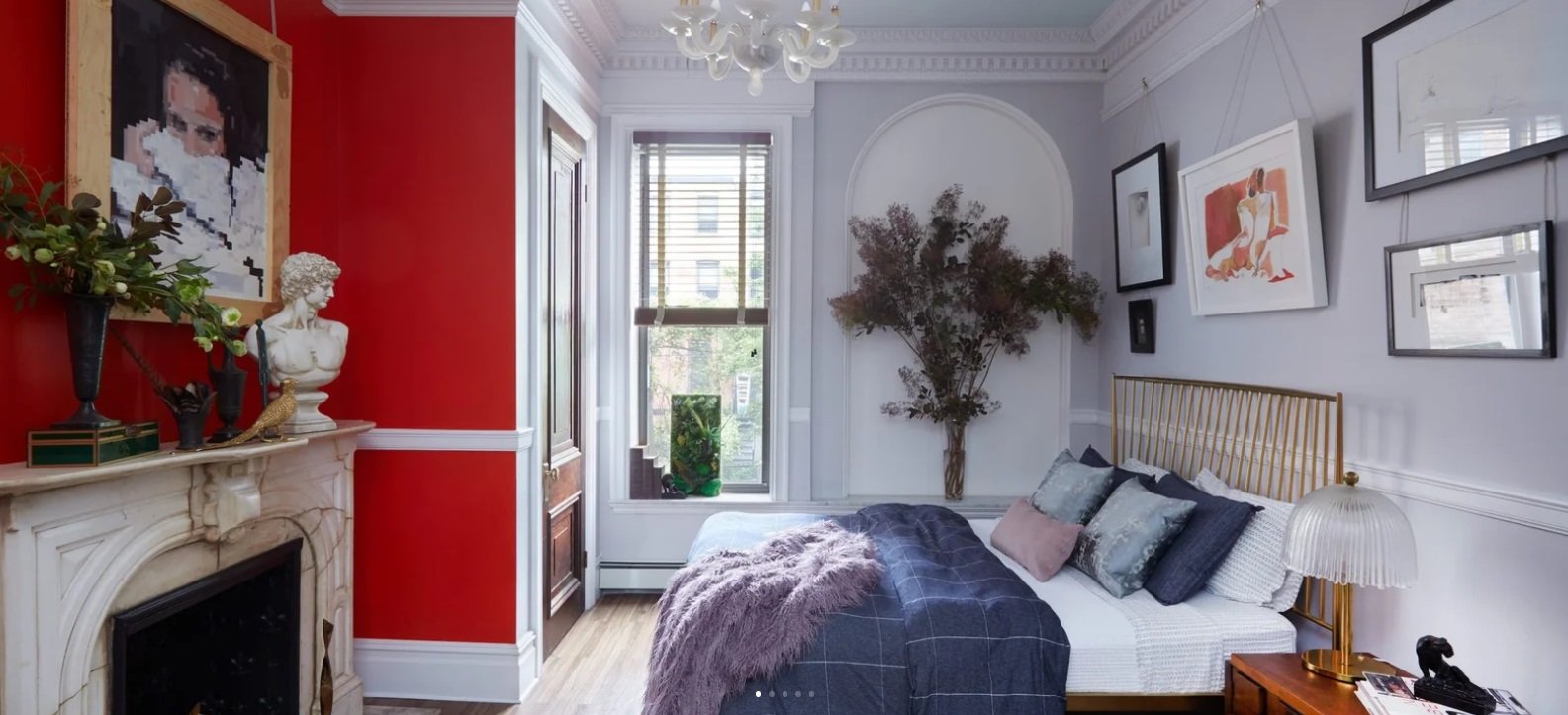
The bedroom was designed as a quieter retreat, but it still carries the same old-and-new mix as the rest of the home.
Key pieces include:
- Mahogany door: rescued from demolition
- Right-side lamp: vintage mid-century blown glass crystal lamp
- Art hangings: Rose Bowl Flea Market and Clignancourt Market in Paris
- Bedding: West Elm and Brooklinen
- Bed frame: CB2
- Bird: Made Goods
- Left-side lamp: Target
- Nightstands: 1stDibs
- Picture top left: eBay
- Picture top right: Scarlett Bailey
The rescued mahogany door is one of my favorite details. I love finding ways to save beautiful architectural pieces during gut renovations. Those details bring soul into a project and keep even innovative updates from feeling disconnected from the brownstone.
The bedroom works because it is not trying too hard. It is calm, warm, and personal. Some pieces are vintage. Some are retail. Some are found. Some are refined. Together, they create one of those environments that feels lived in and considered.
Why do personal objects matter in interior design?
Personal objects are what keep a room from feeling anonymous.
A designer can choose the right sofa, rug, wall color, and lighting. But the room becomes more meaningful when it includes pieces with history: a rescued door, a flea market painting, a vintage lamp, a framed find, a family object, or something discovered while traveling or recommended by friends.
That is especially true in a brownstone. The architecture already has memory. The interiors should have some memory too.
Good interior design is not just about making a room attractive. It is about making it feel specific, so all the pieces work together and the bedroom becomes one of the home’s most restful environments.
What should clients look for in the best interior designers in NYC?
Clients should look for an NYC interior designer who understands both style and constraints, so you can move forward with confidence.
New York homes are complicated. Brownstones, lofts, co-ops, condos, and prewar apartments all come with different challenges. Strong interior design services help streamline decisions around layout, light, storage, architecture, contractors, building rules, budget, sourcing, and how the client actually lives. When clients hire interior designers, they are usually looking for expert planning and furniture selection that make the process feel more personal and less stressful.
For brownstones specifically, it helps to work with someone who respects historic detail but is not afraid of modern choices. The best result usually comes from balance: preserve what matters, update what no longer works, and layer in pieces that make the home feel personal, including art, vintage finds, family objects, and pieces discovered through friends or recommendations.
When should you hire an NYC interior designer for a brownstone renovation?
Hire an NYC interior designer when the decision can strongly affect renovation success, especially if the project needs more than surface decorating.
That might mean rethinking the layout, choosing finishes, coordinating furniture, planning lighting, working with contractors, selecting art, designing custom cabinetry, or deciding what historic details should stay. New York homes are complicated. Co-op and condo boards often enforce strict alteration agreements and work hours, and experienced designers can help guide approvals.
A brownstone renovation has a lot of moving parts. Some decisions are aesthetic. Some are practical. Many are both. That is where full design services matter, especially when they include coordination through construction. Local design support is also valuable because designers based here understand NYC building rules and vendor networks. Local NYC contractors must meet specific licensing requirements, and an architect is required when structural walls or plumbing are being altered.
A designer helps connect those decisions so the home does not feel pieced together. The goal is a space that feels cohesive, functional, and personal without losing the character that made the brownstone worth renovating in the first place. Before committing, communicate clearly about project scope, confirm fee structures, and review contracts carefully so you can move forward with confidence.
What this Brooklyn brownstone renovation shows about NYC interior design
This project shows why I love working on historic New York homes.
A Brooklyn brownstone gives you a strong foundation: architecture, proportion, detail, and history. The design challenge is to make that foundation work for modern life.
In this apartment, the mix of antique pieces, flea market finds, custom cabinetry, retail furniture, art, lighting, and rescued architectural details creates a home that feels layered rather than decorated.
That is the kind of interior I always come back to. Not perfect. Not generic. Not one-note. Just personal, functional, warm, and full of character.
NYC Interior Designer FAQ
What does an NYC interior designer do?
An NYC interior designer helps plan, furnish, renovate, and style homes in New York City. Some firms also make the process more accessible, offering 1-3 designer profiles within 24 hours and budget-friendly plans with no minimum spend. That can include layout, furniture, lighting, paint colors, custom cabinetry, sourcing, contractor coordination, art placement, and finish selections.
How do NYC interior designers work with brownstones?
NYC interior designers often balance historic details with modern living. In a brownstone, that may mean preserving moldings, doors, fireplaces, and proportions while updating kitchens, lighting, furniture, storage, and finishes.
How do you make a Brooklyn brownstone feel modern without losing character?
Keep the architectural details that give the home its identity, then add modern furniture, updated lighting, custom cabinetry, art, vintage pieces, and practical layouts. The goal is balance, not erasure.
Why do interior designers mix vintage and modern furniture?
Mixing vintage and modern furniture keeps a room from feeling generic. It gives the space depth, history, contrast, and personality.
Is a Brooklyn brownstone renovation different from decorating a newer apartment?
Yes. A brownstone usually has stronger architectural character and more historic constraints. Newer apartments may need more warmth and detail added, while brownstones often need careful editing, restoration, and modernization.
When should you hire an NYC interior designer?
Hire an NYC interior designer when the project involves renovation decisions, difficult layouts, lighting problems, furniture sourcing, custom work, historic details, or a room that needs to feel more finished and personal.
What makes a good NYC interior designer?
A good NYC interior designer understands architecture, scale, sourcing, light, layout, budget, and how people live in New York spaces. Style matters, but judgment matters more.
Related Reading
For more on the design process, see our guide on How to Choose an Interior Designer.
For more New York apartment ideas, see our article on Loft Apartment Interior Design Ideas.
For more room-specific advice, see our guides to bedroom paint colors, low ceiling design tricks, and layout planning.